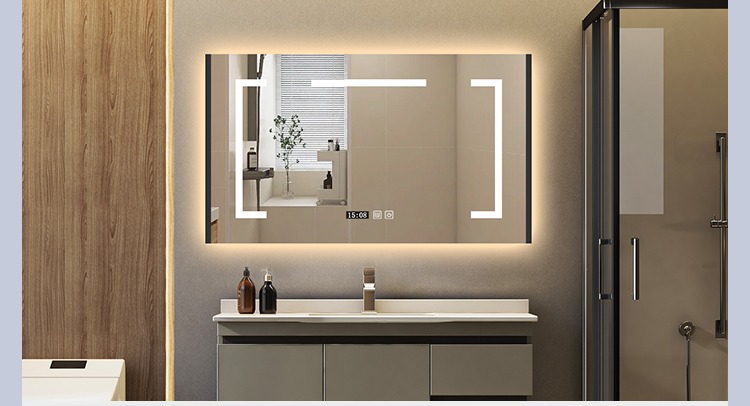
The commercial bathroom industry has changed significantly over the last five years. Property developers, hotel groups, and building material distributors are no longer purchasing bathroom mirrors as standalone decorative products. Instead, they are looking for multifunctional solutions that combine lighting, storage, durability, and modern aesthetics into one integrated product.
This shift explains why LED mirror cabinets have become one of the fastest-growing categories in commercial bathroom projects across the United States, Canada, and Australia.
From boutique hotels and luxury apartments to healthcare facilities and residential developments, project managers increasingly prefer mirror cabinets because they improve storage efficiency, simplify installation planning, and add value without increasing bathroom space.
However, choosing the right manufacturing partner is far more important than simply choosing the right design. Commercial buyers need suppliers capable of maintaining stable quality across thousands of units, meeting regional compliance requirements, supporting OEM branding, and delivering projects on schedule.
Drawing on years of manufacturing experience supplying global B2B customers, this guide explains how professional buyers evaluate LED mirror cabinet suppliers, what specifications matter most, and how to avoid costly sourcing mistakes before production begins.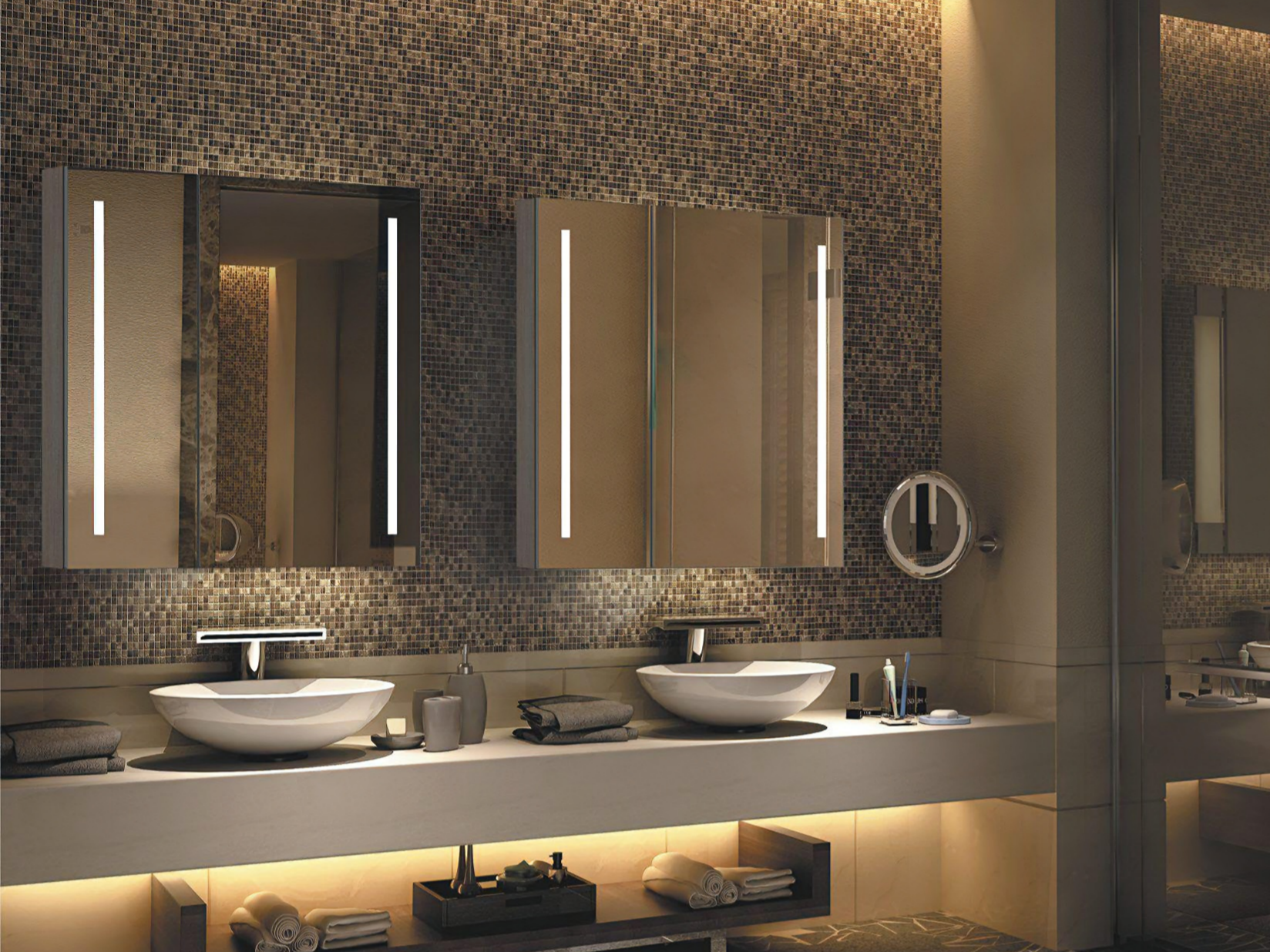
Unlike conventional mirrors, LED mirror cabinets solve multiple commercial challenges simultaneously.
For hotels, they reduce countertop clutter while creating a premium guest experience.
For apartment developers, they maximize storage in compact bathrooms without adding additional furniture.
For wholesalers, they provide higher product value and stronger profit margins than standard mirrors.
For renovation contractors, integrated lighting and storage simplify bathroom layouts while reducing installation complexity.
As commercial construction increasingly emphasizes functionality over decoration, mirror cabinets continue gaining market share.
American developers increasingly specify mirror cabinets with integrated LED lighting, anti-fog systems, soft-close hinges, and electrical outlets.
Luxury multifamily projects also demand customizable cabinet sizes to accommodate varying bathroom layouts.
Common priorities include:
UL compliant electrical components
Energy-efficient LED lighting
Easy maintenance
Consistent appearance throughout the project
Canadian buyers focus heavily on durability due to higher humidity and seasonal temperature changes.
Popular specifications include:
Moisture-resistant cabinet construction
Copper-free mirrors
Corrosion-resistant aluminum frames
Adjustable glass shelving
Many distributors also request bilingual packaging for regional distribution.
Australian hospitality and residential projects typically prioritize minimalist design with high moisture resistance.
Popular requirements include:
IP-rated LED lighting
Anti-rust aluminum cabinets
Coastal corrosion resistance
Warm and natural light options
Energy efficiency also plays a significant role in commercial purchasing decisions.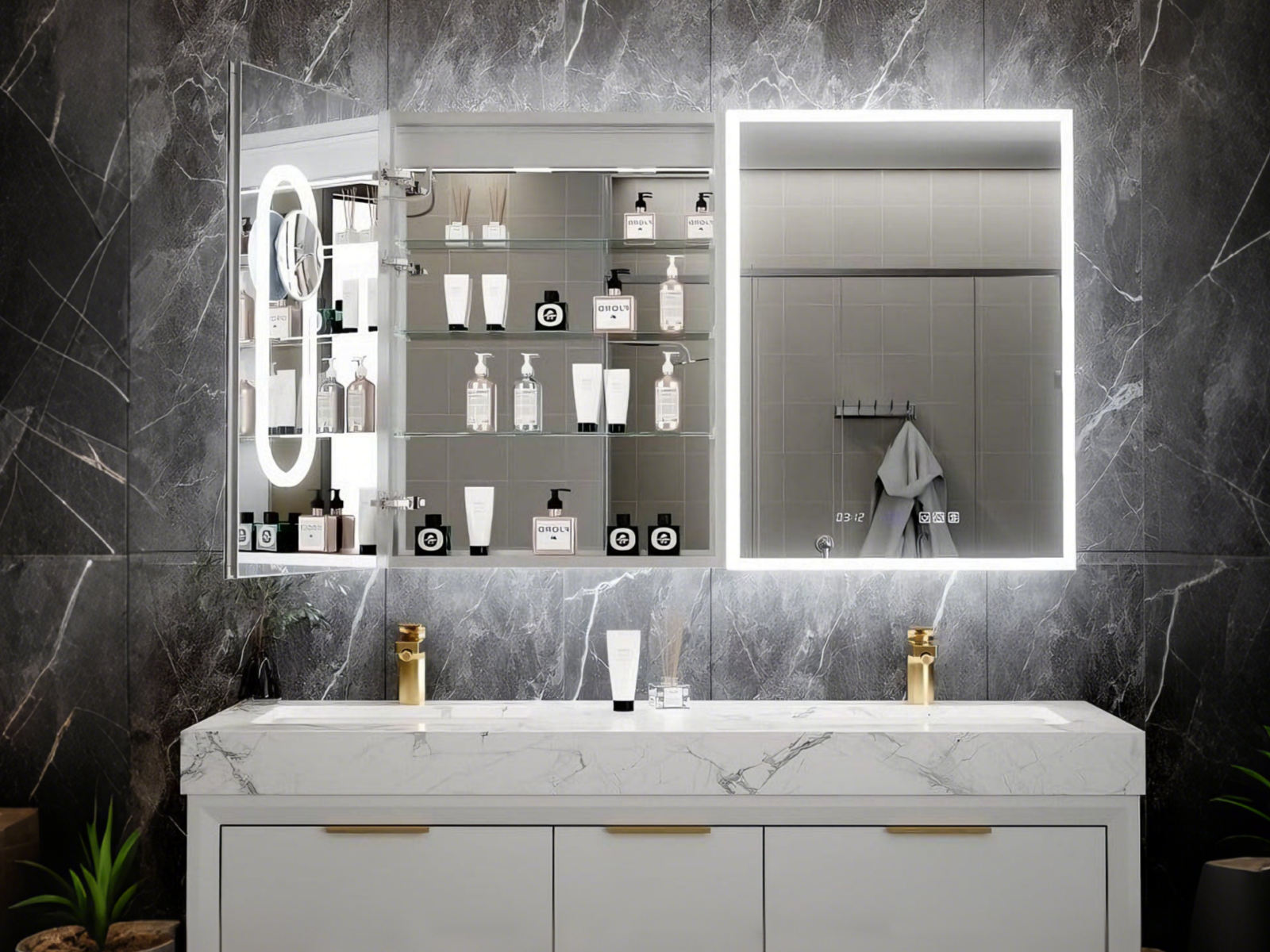
A mirror cabinet's lifespan depends largely on its internal structure rather than its appearance.
Professional buyers usually inspect:
Aluminum frame thickness
Cabinet welding quality
Door alignment
Shelf stability
Load-bearing capacity
Factories with automated production lines generally achieve better consistency than manual workshops.
Lighting quality directly affects user experience.
Commercial projects commonly specify:
3000K Warm White
4000K Natural White
6500K Cool White
Premium mirror cabinets also include:
Memory function
Touch control
Stepless dimming
CRI90 lighting
Long-life LED strips
Stable LED sourcing is essential for maintaining consistent color temperature across large production runs.
Today's commercial buyers increasingly request smart functionality, including:
Anti-fog technology
Digital clock
Temperature display
Motion sensors
Bluetooth speakers
Interior cabinet lighting
USB charging ports
Power sockets
Instead of offering every feature, experienced manufacturers help customers select only the functions appropriate for their target market.
Many wholesalers want products that differentiate them from competitors.
Professional OEM services typically include:
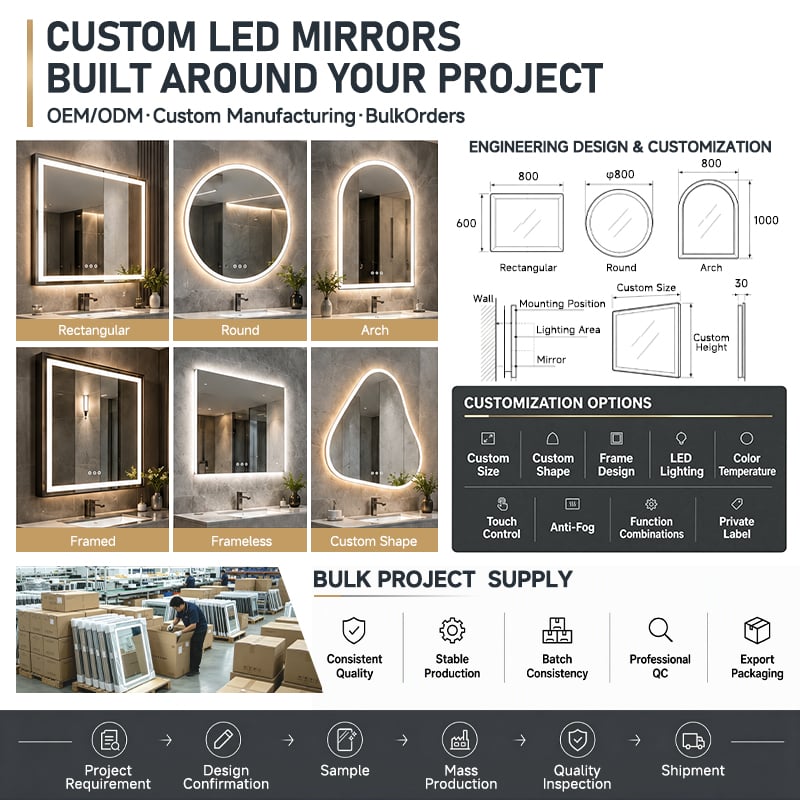
Custom cabinet dimensions
Logo engraving
Exclusive mold development
Retail packaging
Installation manuals
Barcode labeling
These services help distributors build long-term brand value instead of competing solely on price.
Reliable factories inspect products at every production stage rather than only before shipment.
A typical inspection process includes:
Incoming material inspection
Cabinet assembly inspection
LED testing
Functional testing
Surface inspection
Aging tests
Packaging inspection
This significantly reduces warranty claims after installation.
Mirror cabinets are more complex than ordinary mirrors because they contain both glass and storage structures.
Professional export packaging often includes:
Double-wall cartons
Foam corner protection
Honeycomb reinforcement
Wooden crate options
Drop-test verification
Packaging quality becomes especially important for ocean freight shipments to North America and Australia.
Large commercial projects may require several production batches over many months.
Professional buyers therefore evaluate:
Factory production capacity
Component inventory
Delivery consistency
Production scheduling
Engineering support
Reliable supply is often more valuable than the lowest quotation.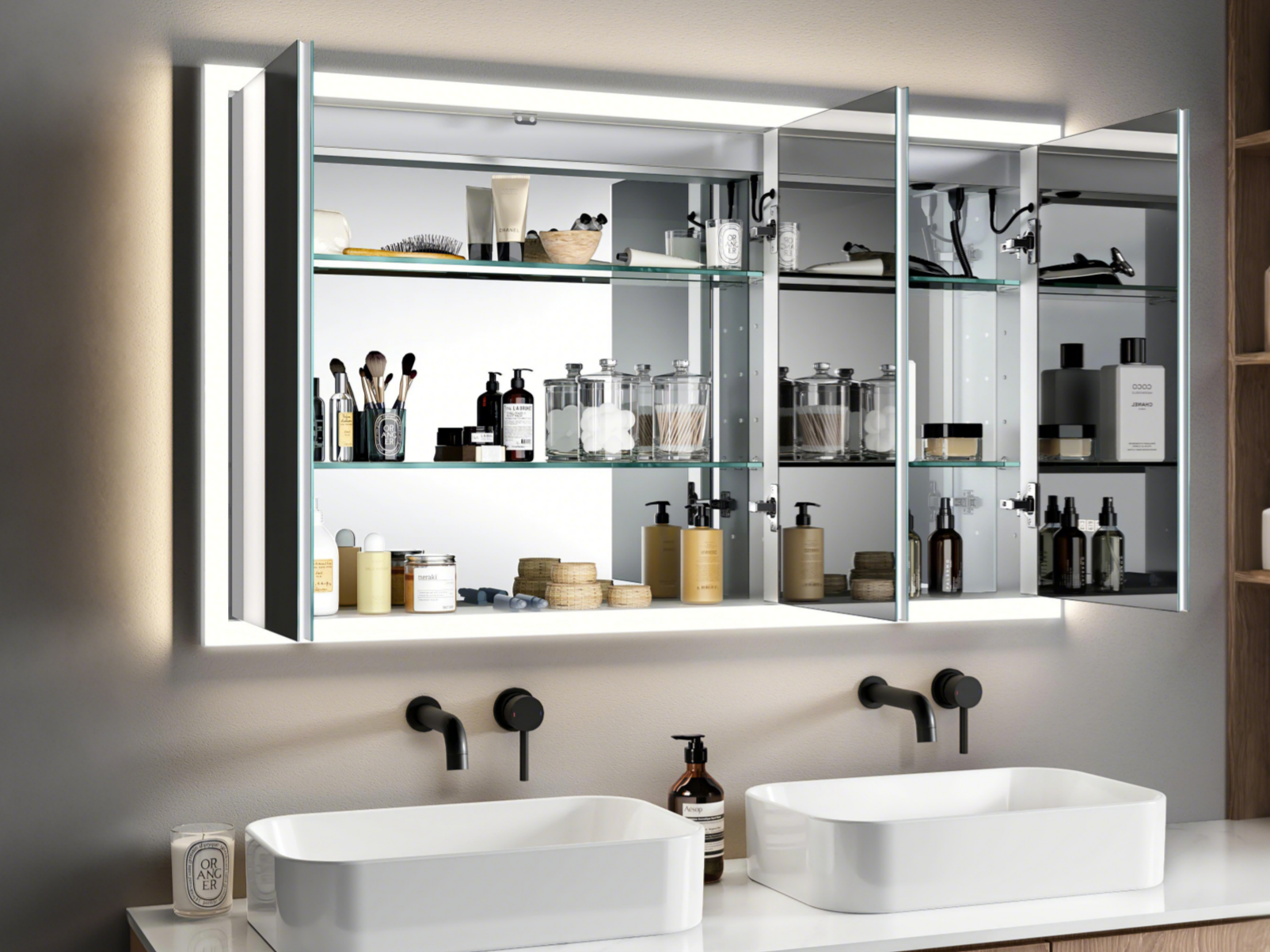
One common misconception is believing all mirror cabinets are manufactured using identical internal structures.
In reality, hidden differences such as hinge quality, cabinet material, LED drivers, waterproof ratings, and packaging standards significantly affect long-term performance.
Another frequent mistake is selecting suppliers without verifying production capability.
Some companies only assemble products while outsourcing major manufacturing processes, making quality consistency difficult to control.
Experienced procurement teams usually conduct factory audits before confirming long-term partnerships.
A hotel renovation project required over 600 customized LED mirror cabinets featuring integrated anti-fog technology and adjustable shelving.
To simplify future maintenance, spare electrical components were packed separately with each shipment.
A distributor launched a private-label mirror cabinet collection featuring bilingual manuals, customized packaging, and exclusive cabinet dimensions unavailable through competing suppliers.
The differentiated product line significantly strengthened its position in regional retail channels.
A residential developer selected aluminum LED mirror cabinets with enhanced moisture resistance for coastal apartments.
The cabinet dimensions were customized to fit standardized prefabricated bathroom modules, reducing installation time onsite.
Yes. Size, lighting, storage layout, shelves, doors, logo, packaging, and smart functions can all be customized for OEM and ODM projects.
Commercial mirror cabinets can be manufactured to comply with UL, CE, RoHS, EMC, LVD, SAA, and other regional certification requirements depending on the destination market.
Standard models generally require 25–35 days, while customized projects typically require 35–50 days after sample approval.
Yes. Long-term customers can receive spare LED drivers, touch sensors, hinges, shelves, and other components to simplify future maintenance.
Professional export packaging, reinforced cartons, protective foam, optional plywood crates, and strict drop-testing procedures help minimize transit risks.
Absolutely. We regularly supply wholesalers, hotel contractors, developers, engineering companies, and building material distributors with project-based mirror cabinet solutions.
For commercial buyers, the greatest value isn't simply obtaining a competitive unit price—it's minimizing project risk.
A factory partner can respond more quickly to engineering changes, verify technical specifications before production, coordinate packaging for different markets, and maintain consistency across multiple shipments. Direct communication with manufacturing, quality control, and R&D teams also shortens decision cycles and helps avoid costly misunderstandings.
For distributors developing private-label brands, working directly with a manufacturer provides greater flexibility in product development, packaging, and long-term supply planning.
Whether you're sourcing for a hotel renovation, residential development, retail distribution, or an OEM private-label program, choosing an experienced manufacturing partner can make a significant difference in product consistency, delivery reliability, and long-term customer satisfaction.
Our factory supports:
OEM & ODM manufacturing
Commercial project solutions
Hotel and apartment specifications
Custom cabinet dimensions
Private-label branding
Engineering drawing support
Bulk quotations
Sample development
Export packaging optimization
Global shipping coordination
If you're planning your next LED mirror cabinet project for the US, Canada, Australia, or European markets, our engineering and sales teams are ready to help you evaluate specifications, reduce procurement risks, and build a supply program tailored to your business.


 EN
EN