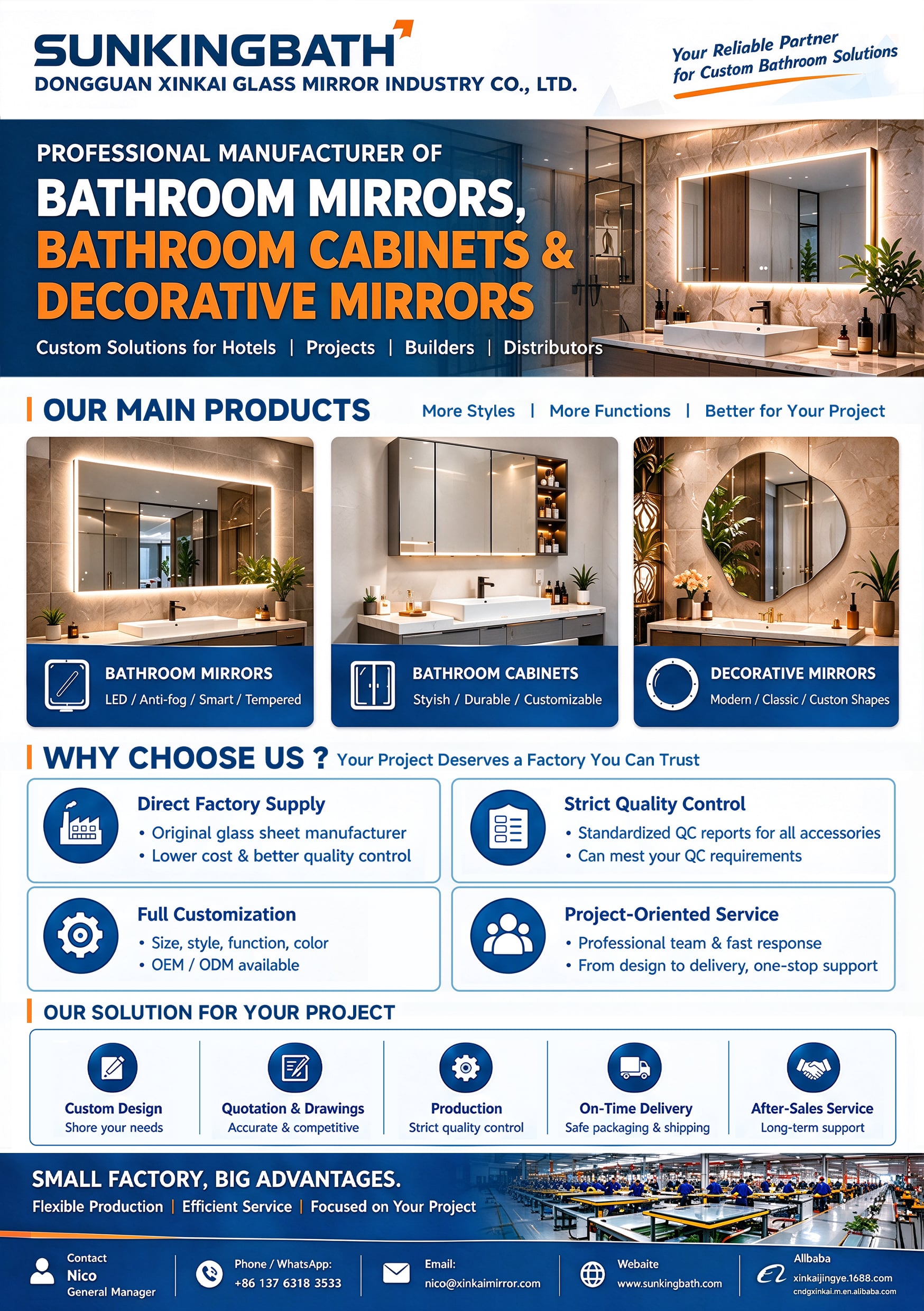
شراء مرآة ليد مرآة الحمام لغرفة واحدة أمرٌ بسيط نسبيًّا. أما شراء مئات المرآيات لفندق أو مشروع تطوير شقق أو تجديد حمامات أو نشاط توزيع فهو مهمةٌ مختلفة تمامًا.
بالنسبة مشتري الشركات، فإن المرآة نفسها ليست سوى جزءٍ واحدٍ من قرار الشراء.
كما يجب أن تأخذ في الاعتبار الأبعاد والإنارة والتكوين الكهربائي وطريقة التركيب والتغليف وثبات الجودة والتخصيص ومدة التوريد والشهادات المعتمدة، وكذلك ما إذا كان المصنِّع قادرًا فعليًّا على دعم مشروعك بدءًا من العينة الأولى وحتى الإنتاج الضخم.
وهنا تظهر أهمية اختيار مصنِّعٍ خبيرٍ للمرآة الكهربائية للحمامات.
في شركة سانكينغباث، نتعاون مع موزِّعين ومقاولين ومشاريع فنادق وشركات تجديد وعلامات تجارية خاصة تحتاج إلى أكثر من منتج قياسي من الكتالوج. وخبرتنا في الإنتاج حسب الطلب (OEM) والإنتاج حسب التصميم (ODM) تتيح لنا تعديل أبعاد المرآة ووظائفها وتكوين الإضاءة ومظهرها وفق متطلبات المشروع.
إذن، ما الذي يجب أن يتحقق منه المشتري المحترف قبل إتمام الطلب؟
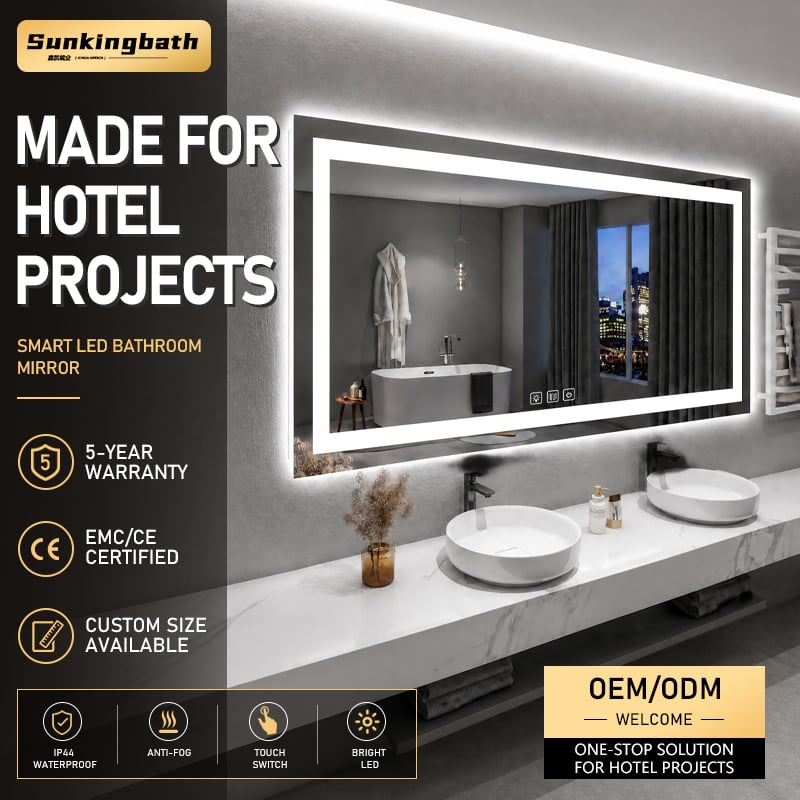
من الأخطاء الشائعة في الشراء التجاري أن يختار الشخص المرآة أولاً ثم يحاول لاحقاً جعلها مناسبة للمشروع.
أما في المشاريع بين الشركات، فيجب أن تسير العملية عادةً بالاتجاه المعاكس.
قبل اختيار مرآة حمام ذات إضاءة ليد، فكّر في الآتي:
أين سيتم تركيب المرايا؟
كم عدد الوحدات المطلوبة؟
هل جميع مواقع التركيب متساوية في الحجم؟
هل المرآة مثبتة على الحائط أم مدمجة داخله؟
ما نوع التغذية الكهربائية المتاحة؟
هل يتطلب المشروع وظيفة منع التكثف؟
هل الإضاءة القابلة للتعديل ضرورية؟
هل توجد متطلبات شهادات محددة؟
هل يحتاج المشتري إلى وضع علامة تجارية خاصة أو تغليف مخصص؟
ما الجدول الزمني المتوقع للتركيب؟
على سبيل المثال، قد يتطلب مشروع فندقي مئات المرايا ذات المظهر والوظائف نفسها، بينما قد تحتاج مشروعات الإسكان إلى مقاسات مختلفة تناسب تخطيطات الحمامات المتنوعة.
يجب أن يكون المصنع ذو الخبرة في المشاريع قادرًا على مناقشة هذه المتطلبات قبل اقتراح منتج معين.
وهذه المناقشة قد توفر وقتًا كبيرًا لاحقًا.
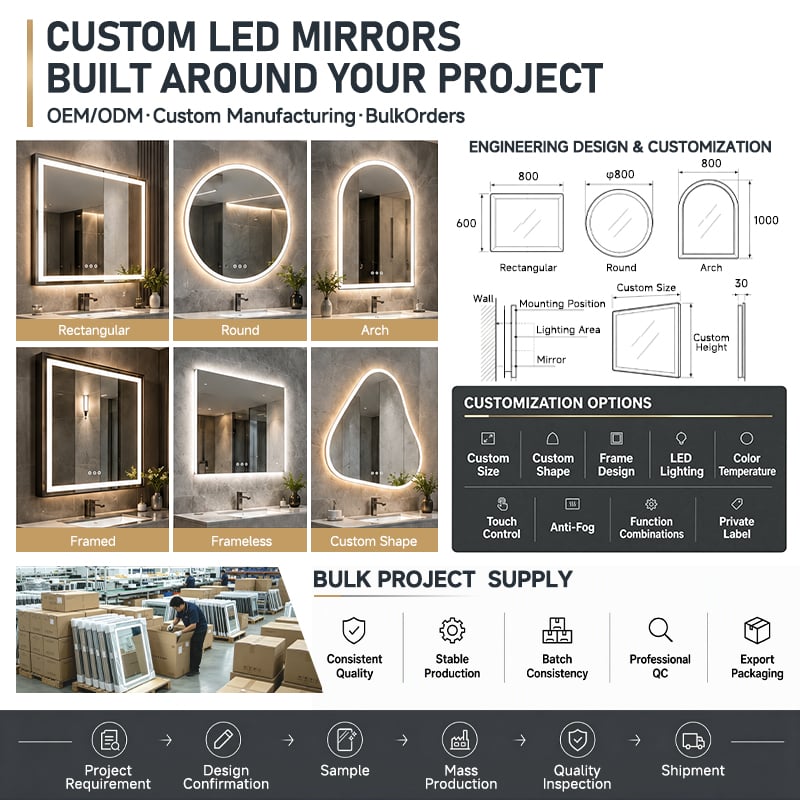
المقاسات القياسية مفيدة لموزِّعي التجزئة وأعمال البيع بالتجزئة، لكن مشاريع البناء والضيافة غالبًا ما تتطلب متطلبات مختلفة.
قد تتطلب تصميمات الحمام مرآةً تكون:
أعرض من النموذج القياسي
أطول لتناسب وحدة غسل معينة
مُصمَّمة لجدار ضيِّق
مصنوعة لتتناسق مع خزانة معيَّنة
مُنتَجة بأبعاد متعددة ضمن السلسلة نفسها
مُخصَّصة بإطار أو بدون إطار
لهذا السبب تُعد المرآيات المخصصة للحمام والمزودة بتقنية LED غالبًا أكثر عملية في عمليات شراء المشاريع.
ومع ذلك، فإن التخصيص لا يعني ببساطة تغيير أبعاد الزجاج.
وينبغي أن تأخذ المصنع المحترف بعين الاعتبار كيف يؤثر الحجم الجديد على ترتيب إضاءة LED، وهيكل اللوحة الخلفية، والتوصيلات الكهربائية، ووظيفة التسخين، والتغليف، والتركيب.
لطلبات التوريد التجارية الأكبر، يُعَدُّ الاتساق بين الدفعات المختلفة مهماً بنفس القدر.
مرآةٌ تبدو صحيحةً في العيّنة الأولى لكنها تتغيَّر قليلاً أثناء الإنتاج الضخم قد تُسبِّب مشاكل أثناء التركيب.
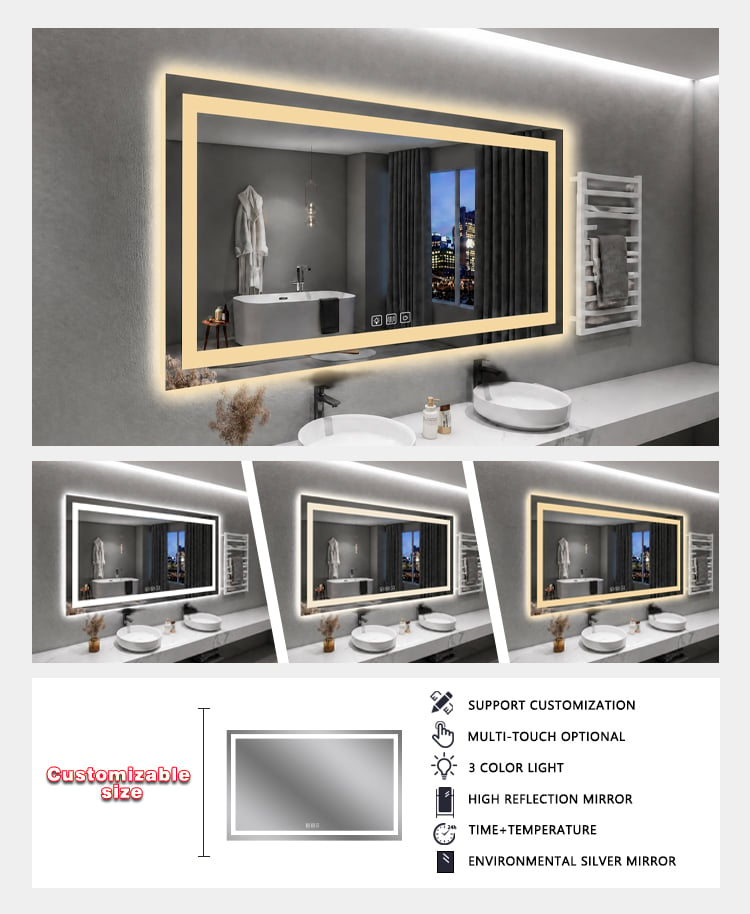
تُعَدُّ الإضاءة واحدةً من أبرز السمات المرئية للمرآة المُضاءة لغرف الاستحمام، لكن لا ينبغي تقييمها بالاعتماد على السطوع وحده.
بالنسبة للتطبيقات التجارية، يجب على المشترين أخذ تكوين الإضاءة بأكمله في الاعتبار.
وبالاعتماد على طبيعة المشروع، قد تشمل الخيارات ما يلي:
إضاءة LED خلفية
إضاءة الأمام
إضاءة قابلة للتعديل الشدة
درجة حرارة اللون قابلة للتعديل
تكوينات مختلفة للمفاتيح
تحكم لمسة
ضوابط استشعارية
وظائف الذاكرة
وللفنادق والمشاريع السكنية الفاخرة، يمكن أن توفر الإضاءة القابلة للضبط تجربة مستخدمٍ أكثر مرونة.
للموزِّعين، فإنَّ عرض عدة تكويناتٍ من نفس المصنع يمكن أن يُسهِّل أيضًا إنشاء مستويات أسعار مختلفة داخل نطاق منتج ما.
النقطة المهمة هي أنَّ نظام الإضاءة يجب أن يُصمَّم وفقًا للتطبيق المقصود بدلًا من إضافته لمجرد شعبيَّة ميزة الصمام الثنائي الباعث للضوء (LED).
قد تبدو وظيفة منع التكثُّف ميزةً صغيرة عند الاطلاع على كتالوج منتج.
إلا أنَّها في التطبيقات الفندقية والسكنية الفعلية تُحدث فرقًا ملحوظًا.
تتميَّز الحمامات بنسبة رطوبة عالية، لا سيما بعد الاستحمام. وبغياب نظام إزالة الضباب المناسب، يمكن أن يغطِّي التكثُّف السطح العاكس بسرعة.
وبالتالي، فإنَّ مرآة الحمام المزوَّدة بإضاءة صمام ثنائي باعث للضوء (LED) ووظيفة منع التكثُّف تقدِّم تجربة مستخدم أكثر عمليةً للفنادق والشقق والمشاريع السكنية الفاخرة.
إلا أنَّ مشتري الشركات (B2B) يجب أن يسألوا عن طريقة دمج نظام منع التكثُّف.
من الأسئلة المهمة ما يلي:
أين يقع منطقة التسخين؟
وكيف تُدار هذه الوظيفة؟
هل نظام التسخين مناسب لحجم المرآة؟
كيف يتم التعامل مع التوصيل الكهربائي؟
هل خضع النظام للاختبار قبل الشحن؟
هذه التفاصيل أكثر فائدة من مجرد رؤية عبارة «مضاد للضباب» مذكورة في صفحة المنتج.
بالطبع، يُعد السعر عاملاً مهماً في عمليات الشراء بين الشركات.
لكن أقل سعر وحدوي لا يعني بالضرورة أقل تكلفة للمشروع ككل.
فإذا وصلت دفعة ما بزجاج تالٍ، أو إضاءة غير متجانسة، أو أبعاد غير صحيحة، أو تغليف رديء، أو مشاكل كهربائية، فقد تتفاقم التكاليف الإضافية بسرعة لتتجاوز الفرق الأصلي في السعر.
ولهذا السبب، ينبغي على المشترين أن يستفسروا من المصنّعين عن إجراءات ضبط الجودة التي يتبعونها.
في شركة Sunkingbath، تدعم جودة الإنتاج إجراءات تفتيش متعددة، تشمل اختبار قدرة التحمّل واختبار الشيخوخة واختبار السقوط. كما تتم مراجعة مرحلتي الإنتاج والتغليف قبل الشحن.
يجب أن يشمل تقييم المورِّد المفيد ما يلي:
جودة الزجاج → تشطيب الإطار أو الحواف → تركيب مصابيح الليد → المكونات الكهربائية → اختبار الأداء → الفحص النهائي → التغليف → التحميل
وهذه الطريقة ذات أهمية خاصة في طلبات الفنادق الكبيرة أو مشاريع البناء، حيث قد تكون تكلفة استبدال الوحدات المعيبة بعد التركيب مرتفعة جدًّا.
قد يجتاز مرآة الحمام ذات مصابيح الليد فحص المصنع بنجاح تام، ومع ذلك تصل إلى العميل تالفة إذا لم يكن التغليف مصمَّمًا للاستخدام في النقل الدولي.
وهذا سببٌ من الأسباب التي تجعل المصدِّرين ذوي الخبرة يعاملون التغليف كجزءٍ لا يتجزأ من عملية التصنيع.
وبالنسبة للشحنات التجارية الدولية (B2B)، ينبغي على المشترين أن يسألوا:
كيف يتم حماية الزجاج؟
هل تُستخدم رغوة مُعزَّزة؟
هل الكرتون قويٌّ بما يكفي للنقل لمسافات طويلة؟
هل المرايا المتعددة مفصولة بشكلٍ صحيح؟
هل التغليف الخشبي متاحٌ لبعض المشاريع؟
هل تم وضع تحذيرات المناولة المناسبة على العبوة؟
كيف تُعامَل البضائع التالفة؟
لطلبات الكميات الكبيرة، يجب أن يراعي تصميم التغليف أيضًا كفاءة تحميل الحاويات.
التغليف الجيد لا يعني ببساطة إضافة مواد أكثر. بل يجب أن يوازن بين الحماية، واستغلال المساحة، وسهولة المناولة، وتكلفة النقل.
قد تختلف متطلبات الامتثال باختلاف الأسواق والمشاريع.
لا ينبغي للمشتري أن يفترض أن شهادةً واحدةً تغطي تلقائيًّا جميع المشاريع.
قبل بدء الإنتاج، تأكَّد من متطلبات السوق الوجهة، وكذلك من متطلبات صاحب المشروع أو المقاول أو الجهة المحلية المختصة، عند وجودها.
حسب السوق وتكوين المنتج، قد يحتاج المشترون إلى وثائق تتعلق بمعايير مثل:
CE
RoHS
Ul
ISO
EMC
LVD
إدارة العلاقات العامة
متطلبات أخرى خاصة بالسوق
يجب أن يكون المصنّع ذو الخبرة قادرًا على التوضيح الواضح للشهادات التي تنطبق على المنتج المحدد والتكوين الكهربائي الذي يتم طلبه.
وهذا أمرٌ بالغ الأهمية عندما تُركَّب المرايا في الفنادق أو الشقق أو المباني التجارية أو غيرها من المشاريع الخاضعة للتنظيم.

يوجد فرقٌ جوهريٌّ بين مصنعٍ يبيع مرايا قياسية ومصنعٍ يمكنه تطوير منتجات وفق متطلبات المشتري.
وبالنسبة للموزِّعين والعلامات التجارية الخاصة، قد تشمل القدرة على التصنيع حسب الطلب (OEM) والتصميم حسب الطلب (ODM):
الأبعاد المخصصة
إضاءة مخصصة
أنظمة تشغيل مخصصة
تطبيق الشعار
تخصيص العبوات
مزيج المنتجات
تخصيص الإطار
التوافقات الوظيفية
إنتاج علامات تجارية خاصة.
فعلى سبيل المثال، قد يرغب موزِّع في سلسلة واحدة من المرايا ذات الإضاءة LED بثلاثة أحجام، وخيارات إضاءة اثنتين، وتعدد في تكوينات التحكم.
بدلاً من استيراد كل إصدار من مورد مختلف، يمكن لشركة تصنيع خبيرة أن تطوّر المجموعة بأكملها ضمن نظام إنتاج واحد.
وهذا يسهّل عملية التعبئة المستقبلية ويساعد في الحفاظ على هوية منتج متسقة.
سعة الإنتاج في المصنع أمرٌ مهم، لكن الخبرة في تنفيذ المشاريع مهمةٌ أيضاً.
قد لا يفهم المورِّد الذي يُلبّي طلبات بيع بالتجزئة الفردية بالضرورة التحديات المرتبطة بمشروع فندقي يتضمّن ٣٠٠ وحدة.
عادةً ما تتطلّب عمليات الشراء المرتبطة بالمشاريع تنسيقاً أكبر.
قد يتعيّن على المورِّد التعامل مع:
مناقشات فنية
اختيار المنتج
تأكيد العينة
التحقق من الرسومات أو المواصفات
التفاوض على السعر
جدولة الإنتاج
فحص الجودة
التغليف
تنسيق الشحنات
الدعم ما بعد البيع
ولهذا السبب يجب على مشتري الأعمال أن يطرحوا سؤالاً بسيطاً:
هل تعامَل هذا المورِّد سابقاً مع مشاريع مشابهة لمشروعي؟
الخبرة مع الفنادق والشقق والمجمعات التجارية وشركات الترميم والموزعين يمكن أن تقلل من مشكلات التواصل أثناء الإنتاج.
قبل الإنتاج الضخم، يجب اعتبار العينة مرجعاً فنياً.
لا تتحقق فقط مما إذا كان المرآة «تبدو جيدة».
قد يتضمن إجراء اعتماد العينة الاحترافي ما يلي:
الأَبْعَادُ الكُلِّيَّةُ
مظهر المرآة
إنهاء الحواف
سطوع الـ LED
درجة حرارة اللون
تشغيل المفتاح
أداء مقاومة الضباب
موقع التوصيلات الكهربائية
طريقة التثبيت
تفاصيل الإطار
مكان الشعار
طريقة التعبئة
وبمجرد اعتماد العينة، يجب تسجيل المواصفات بوضوح.
وهذا يساعد الطرفين على تقليل سوء الفهم أثناء الإنتاج الضخم.
للمشاريع الكبيرة، يمكن أن يصبح العيّنة المُوقَّعة مرجعاً مهماً للدُفعات اللاحقة.
في مشاريع الإنشاءات والضيافة، قد تكون توقيتات التسليم بنفس أهمية أسعار المنتجات.
قد يؤثر تأخير شحنة المرايا في جداول التركيب ويتسبب في تكاليف إضافية للعمالة أو التخزين.
عند طلب عرض سعر، ينبغي على المشترين من الشركات تزويد المورِّد بأكبر قدر ممكن من المعلومات:
الكمية المقدرة
نموذج المنتجات
الأبعاد المخصصة
الوظائف المطلوبة
السوق المستهدفة
تاريخ التسليم المستهدف
متطلبات التغليف
وهذا يمكّن المصنِّع من تقييم طاقة الإنتاج بشكل أكثر واقعية.
كما ينبغي لمصنع ذي خبرة أن يوضّح عوائق الإنتاج المحتملة بدل أن يكتفي بالوعد بأسرع فترة تسليم ممكنة.
قد يكون المورِّد مناسباً لطلب تجريبي مكوّن من ٥٠ قطعة، لكنه يواجه صعوبات عند نمو النشاط التجاري ليصل إلى عدة آلاف من الوحدات.
للموزعين والعلامات التجارية، يهمّ قدرة المورِّد على المدى الطويل.
تتمتّع شركة سانكينغباث بأكثر من ٣٠ سنة من الخبرة في التصنيع، وتشغّل منشأة إنتاج واسعة النطاق تدعم مجموعة واسعة من منتجات المرايا ومتطلبات التخصيص.
لا يقتصر تركيزنا على توريد مرايا الحمام ذات الإضاءة الثنائية الفعّالة (LED) الفردية فحسب، بل نقدّم الدعم أيضاً لـ:
مشاريع الفنادق
مشاريع البناء والتجديد
التوزيع بالجملة
الشركات التي تُنتج علامات تجارية خاصة
برامج التصنيع حسب الطلب (OEM) وتصنيع التصميم حسب الطلب (ODM)
مجموعات المرايا المخصصة
وهذا يسمح للمشترين بالبدء بعينة أو طلب أصغر، ثم تطوير علاقة توريد طويلة الأمد مع توسّع أعمالهم.
بالنسبة لمُشتري الأعمال من الشركات (B2B)، فإن المرايا المناسبة ليست بالضرورة تلك التي تضمّ أطول قائمة من المواصفات.
بل هي المرايا التي تتوافق مع المتطلبات التقنية للمشروع، والميزانية، والتصميم، وظروف التركيب، واحتياجات الامتثال، والجدول الزمني للتسليم، واستراتيجية الشراء طويلة الأمد.
لهذا السبب يجب أن يستند اختيار المورِّد إلى أكثر من صورة المنتج وسعر الوحدة.
يجب أن يكون الصانع ذو الخبرة قادرًا على مناقشة المشروع معك، وتقديم توصياتٍ بشأن التكوينات العملية، وإنتاج عيّنات مخصصة، والحفاظ على الاتساق أثناء الإنتاج الضخم، وتوفير تغليف مناسب، ودعم الطلب بعد الشحن.
في شركة سانكينغباث، ندمج خبرة التصنيع مع القدرة على التصنيع حسب الطلب أو التصميم حسب المواصفات (OEM/ODM) لدعم الموزعين، والمقاولين، ومشاريع الفنادق، وشركات التجديد، والعلامات التجارية الخاصة التي تبحث عن إنتاج موثوق للمرايا الحمامية المزودة بتقنية LED.
هل لديك مواصفات مشروع محددة، أو كمية مستهدفة، أو متطلبات مخصصة لمرايا الحمام؟ أرسل إلينا أبعاد المرايا المطلوبة، والوظائف المفضلة، والكمية التقديرية. ويمكن لفريقنا تقييم المتطلبات واقتراح حل إنتاج مناسب.
هل يمكن تخصيص المرايا الحمامية المزودة بتقنية LED لمشاريع الفنادق؟
نعم. يمكن تطوير طلبات المشاريع وفقًا لأبعاد مخصصة، وتوزيعات الإضاءة، ووظائف التحكم، والإطارات، والشعارات، والتغليف، وذلك حسب المتطلبات.
هل يمكنكم إنتاج مرايا بأحجام مختلفة ضمن مشروع واحد؟
نعم. يمكن مناقشة أبعاد متعددة لنفس سلسلة المنتجات، وهي مفيدة للفنادق والشقق والمشاريع التي تختلف فيها تخطيطات الحمامات.
هل تدعمون طلبات التصنيع حسب المواصفات (OEM) والعلامات الخاصة؟
نعم. يشمل الإنتاج حسب الطلب (OEM/ODM) مواصفات منتجات مخصصة، وشعارات، وتغليفًا، ووظائف مختارة.
ما المعلومات التي يجب أن أقدّمها عند طلب عرض أسعار؟
من الأفضل أن تُقدّم الكمية المطلوبة، والأبعاد، والوظائف المفضّلة، والسوق المستهدفة، ومتطلبات التغليف، والجدول الزمني المتوقع للتسليم.
هل يمكنكم توفير عينات قبل الإنتاج الضخم؟
نعم. يمكن ترتيب عيّنات للمشترين للتحقق من المظهر والوظائف والأبعاد وغيرها من المواصفات قبل إصدار أوامر إنتاج أكبر.
كيف تحمون المرايا أثناء الشحن الدولي؟
العبوة مُصمَّمة لحماية الزجاج والمكونات الكهربائية أثناء النقل. ويمكن مناقشة عبوات مُعزَّزة وخيارات حماية إضافية وفقًا لمتطلبات الشحنة والمشروع.
في المشتريات بين الشركات (B2B)، مرآة الحمام ذات الإضاءة LED ليست مجرد إكسسوار حمام جاهز.
بل هي مزيجٌ من تصميم المنتج، والتجهيزات الكهربائية، والاتساق في التصنيع، والتخصيص، ومراقبة الجودة، والتعبئة، والامتثال للمعايير، وإدارة التسليم .
ويُسهِّل اختيار مصنِّعٍ لديه خبرة فعلية في المشاريع وخدمات التصنيع الأصلي (OEM) أو التصنيع حسب الطلب (ODM) عملية الشراء إلى حدٍ كبير — من أول عينة حتى آخر شحنة.
فإذا تضمَّن مشروعك القادم تجهيز حمامات الفنادق أو مشاريع الوحدات السكنية أو أعمال التجديد أو التوزيع بالجملة أو نطاق مرآة تحت علامة تجارية خاصة، فإن التعامل المباشر مع مصنِّعٍ ذي خبرة يمنحك مرونةً أكبر بكثيرٍ مما لو اشتريت من كتالوج تجزئة قياسي.


 EN
EN